Airdrop FAQ
- Duration
- In Progress
- Task
- Supported Chains
- Category

Table of Contents
Entering the world of crypto assets for the first time can be overwhelming with its many technical terms and complex procedures. Below, we explain the main questions that beginners face and their answers, using concrete examples and metaphors.
Do I need a lot of money?
Cryptocurrency airdrop campaigns generally do not require large funds. An airdrop is an act in which a cryptocurrency project distributes tokens for free to users who meet certain conditions. Participation conditions vary depending on the project, but the following are common:
Holding a specific cryptocurrency: It may be a condition to hold a certain amount or more of a designated cryptocurrency. In this case, the required holding amount varies depending on the project, but it does not necessarily require a large amount.
Making designated posts on social media: Simple activities on social media, such as following the project's official account and retweeting specific posts, may be a condition.
Using a specific exchange or service: Trading on a specific exchange or using a service within a certain period may be a condition.
Many of these conditions are relatively easy for beginners to achieve, and in most cases, they do not require large funds. However, when participating in airdrops, be aware of the risk of scams, the possibility that the tokens received will not have any value, and tax issues. It is recommended to gather the latest airdrop information from reliable sources and participate cautiously.
The operation is complicated and I don't understand it well
Multi-stage transactions: When moving assets between different blockchains, multiple steps such as bridges and swaps are required. This is like transferring between different modes of transportation, such as airplanes, trains, and buses, or exchanging currencies when traveling to different countries. Confirmation and caution at each step are important.
Swap (Uniswap example)
- Deposit from an exchange (Bitbank, etc.) to a wallet (RabbyWallet, Metamask, OKX Wallet, etc.)
- Go to the Uniswap page and connect your wallet
- Go to the trading page and trade the desired currency
- Approve the transaction and broadcast it to the blockchain
*To check if the transaction is being performed correctly, check the Explorer of each chain.
Anxiety about operation: Seeing many buttons and warnings during a transaction can make you anxious about whether you are operating correctly. In this case, it is important to refer to the official guide or a reliable tutorial and proceed while checking the steps. Also, trying with a small amount can minimize the risk.
I'm worried about security and asset loss
GOX risk: The fear of losing assets is a common anxiety for many beginners. It is important to choose a reliable wallet and exchange and implement security measures such as two-factor authentication. Also, keep your private keys and recovery phrases securely offline and do not share them with others. I have nearly 8 years of experience, but I have not experienced GOX or mistaken transfers. By performing basic security checks, I reduce the risk.
- Is the URL the correct official address, or is it a suspicious address?
- Are you about to send to the wrong address? Have you confirmed the destination address?
- Was the test transfer successful?
- Is the chain correct? (e.g., sending Solana to an Ethereum address)
In addition to the security checks above, using external security tools such as RabbyWallet, GoPlus, and ScanSniffer can help detect malicious contracts and transactions.
It's difficult to determine the value of airdrops and choose projects
Value of airdrops: You may feel that the value of tokens received in airdrops is low. However, airdrops are an opportunity to learn about new projects, and their value may increase in the future. In the past, there have been cases where Uniswap airdrops later became highly valuable.
To identify promising projects, check the following points:
- Team credibility: Check the development team's background and track record.
- Technological innovation: Evaluate the uniqueness of the technology and solutions offered by the project.
- Community activity: Observe user activity on social media and forums.
- Real-world use cases: Check if the project has specific applications to solve real-world problems.
- Transparency: Check if the project's progress and financial information are publicly available.
Evaluating projects using these criteria can help you find valuable airdrops and investment opportunities in the future. Also, you can predict the scale of a project by looking at the fundraising amount and token market capitalization of similar projects.
Wallet and DeFi terminology is difficult
Chain: "Chain" refers to individual networks or platforms based on blockchain technology. Each chain has its own protocols and functions, designed for specific purposes and use cases. Because the purposes are different, projects build applications on chains that suit their objectives. For example, Bitcoin is the first cryptocurrency and a chain specializing in storing and transferring value. Ethereum is a platform that enables the creation of smart contracts and decentralized applications (dApps).
Bridge: Refers to moving assets between different blockchains. It's like exchanging the currency of one country for the currency of another. By using a bridge, you can exchange assets on different blockchains.
Swap: Exchanging different tokens on the same blockchain. This is like exchanging different goods within the same country. For example, exchanging ETH for USDT is a swap.
Gas Fee: The fee required to perform transactions and operations on the blockchain. This can be likened to the fuel cost for driving a car. Gas fees fluctuate depending on the complexity of the transaction and network congestion.
Liquidity Provide: Users deposit their cryptocurrency into an exchange or liquidity pool to create an environment where other users can easily trade. This promotes smooth transactions and market activation. Liquidity providers can receive a portion of the transaction fees as a reward. However, there are also risks such as losses due to price fluctuations (impermanent loss) and smart contract risks, so caution is required.
Summary
The world of crypto assets is complex, with many new concepts and procedures. However, by understanding the basic terms and procedures and utilizing reliable information sources, even beginners can trade with confidence. Don't rush, and gradually accumulate knowledge and experience.
Disclaimer
- ・This article is created for informational purposes only and should not be used to solicit the sale, purchase, or underwriting of cryptocurrencies, securities, or other financial products, nor should it be considered an invitation to engage in such transactions, or constitute financial or investment advice.
- ・The information and opinions in this article are obtained from sources that we believe to be reliable, but we do not guarantee their accuracy, completeness, suitability, timeliness, or truthfulness.
- ・We, the authors, and all related parties are not responsible for any damage or loss caused by or related to the information published in this article. Cryptocurrencies involve hacking and other risks, so please conduct thorough research before using them.
Supervised by
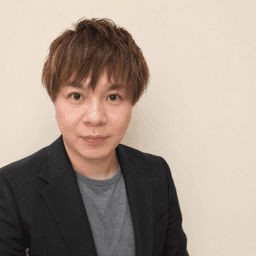
Shingo Arai
CEO, Rokubunnoni Inc.
After completing a Master's degree in Management Engineering at Tokyo University of Science in 2013, Shingo Arai worked as an engineer, data scientist, and data analyst at multiple companies in the web, app, and advertising industries. He entered the cryptocurrency and blockchain space around 2017, founded Rokubunnoni Inc. in January 2018, and launched Crypto Times — a blockchain-focused media outlet — in February 2018. With approximately 9 years in the industry, his expertise spans DeFi, L1/L2 protocols, tokenomics, ZKP, and domestic/international regulatory trends. He actively conducts on-chain asset management and research. He has authored and supervised hundreds of articles, spoken at conferences in Japan and abroad, served as a DeFi investment seminar instructor, and operated KOL ambassador programs.