Shadow | DEX employing an improved x3.3 based on ve3.3 on the Sonic chain
- Duration
- 2025/01/14 ~
- Task
- Supported Chains
- Category

Table of Contents
Project Overview
Shadow Liquidity Exchange (Shadow) is a next-generation decentralized exchange (DEX) employing a unique "x(3,3)" model. This design addresses the "forced lock-up period" and "no exit" issues present in the conventional ve(3,3) model (proposed by Andre Cronje), while enhancing long-term incentives for both users and the protocol. To address issues like "incentive imbalance" and "reduced capital efficiency" prevalent in the existing DeFi space, it has the following features:
- "Free staking & voting" using the unique xSHADOW token
- PvP rebasing (redistribution of early exit penalties from other users to existing stakers)
- Optimization of liquidity incentives through voting (xSHADOW holders control reward and fee distribution)
- Lock-free design ("exit anytime but with a penalty" mechanism to promote long-term holding)
By combining these features, Shadow is building an ecosystem where long-term committed participants receive more rewards, while also providing an exit path for users who want to leave in the short term. Furthermore, it aims to be a comprehensive DEX catering to a wide range of needs by supporting both traditional (Uniswap V2 style) and Concentrated Liquidity (Uni V3 style).
Protocol Features
1. x(3,3) Model
The ve(3,3) model advocated by Andre Cronje allows users to obtain voting rights (ve tokens) by locking up their tokens for an extended period, thereby influencing the protocol's reward distribution. However, users cannot unlock their tokens prematurely, leading to the problem of "dead votes."
Shadow's x(3,3) model does not enforce locking. Instead, it introduces a mechanism where "exit is always possible but with a penalty." This exit penalty is distributed to existing stakers as a rebase (dilution prevention and additional reward), thereby incentivizing continued staking.
2. xSHADOW and PvP Rebase
- xSHADOW The governance token obtained by staking on Shadow. xSHADOW holders can adjust the reward distribution to liquidity pairs (pools) through voting. They can also receive 100% of the revenue generated by the protocol, such as exit penalties, Emission Exit (newly issued tokens), and fees.
- PvP Rebase Tokens confiscated through instant exit (up to 50% penalty) or partial exit (haircut during vesting) are streamed directly to existing stakers. This creates a mechanism where "you can leave if you want without locking, but the more people leave, the richer those who stay become."
3. xSHADOW Exit Options
Instant Exit: 50% penalty (receive SHADOW at a 1:0.5 ratio) 6-month vesting: No penalty (withdraw at a 1:1 ratio) Intermediate period: The shorter the lock-up period, the higher the penalty; the longer the lock-up period, the lower the penalty. While there is always the option to "exit" while staking, the increasing penalty for leaving creates an incentive design that naturally favors long-term participants.
4. Voting and Reward Distribution
- Voting Users holding xSHADOW vote weekly (Epoch) on which LP pairs they want to prioritize.
- Gauge System Based on the voting results, more Emissions (newly issued tokens) and fees are allocated to the selected pairs.
- Vote Incentives The protocol or other projects can offer incentives such as "Vote for this pair and receive additional tokens as a reward," allowing voters to earn additional token rewards.
5. Dynamic Fee & FeeSplit
- Dynamic Fee A mechanism that adjusts the fee rate every 30 seconds based on market volatility and liquidity. Increasing the fee rate during high volatility mitigates LP losses and secures additional revenue.
- FeeSplit For gauged (voted) pools, 100% of the generated fees are generally returned to xSHADOW stakers (depending on the settings, there may also be distribution to LPs and the protocol).
6. Concentrated Liquidity
In addition to the traditional Uni V2 style, Shadow also employs Concentrated Liquidity (Uni V3 style), providing a mechanism to efficiently concentrate capital and provide liquidity. Concentrating liquidity in a narrow price range achieves high capital efficiency and low slippage, and is designed to optimize staking rewards.
Comparison with Competitors
Well-known DEX models in DeFi include Uniswap (V2, V3), Curve (veCRV), and Velodrome (an example of ve(3,3)). Shadow differentiates itself by integrating these elements and incorporating its unique exit mechanism.
Key Points
- Uniswap V2 has no locking function and is a simple and straightforward two-token pool model. While it has governance, token holding equals voting rights, which can make it easier for large holders with capital power to take the lead.
- In ve(3,3), the length of the lock-up period affects voting rights, and participants who contribute for a long time receive greater benefits. However, once locked, it is not easy to move funds.
- Shadow (x(3,3)) encourages long-term participation with a lock-free "penalty → return to existing stakers" mechanism, combined with voting-based reward distribution and dynamic fees, providing a comprehensive incentive design.
Tokenomics Details
- Token Allocation
┗Initial Supply: Approximately 3,000,000 SHADOW
┗Maximum Supply: 10,000,000 SHADOW (asymptotically approaches but unlikely to reach the limit) - Emissions
┗Elastic Emissions
┗Weekly (Epoch) issuance can be adjusted by up to ±25%
┗Aims to control inflation/deflation by flexibly increasing or decreasing according to protocol revenue
┗Distribution by Gauge Voting
┗All Emissions are distributed linearly to the selected liquidity pools according to the voting results of xSHADOW stakers - Utilization of FeeM Gas Refund
┗High-frequency optimization is achieved by using FeeM (gas refund mechanism) in dynamic fee adjustment and MEV countermeasure bot operations.
┗The returned value is reinvested in voting incentives, creating a virtuous cycle in the ecosystem.
Airdrop Information
Details about the airdrop have not been announced yet, but swapping on the project may give you the possibility to receive an airdrop in the future.
Airdrop Procedure
Procedure
- Connect your wallet to the official Exchange
- Swap
- Provide liquidity
Procedure with Images
- Connect your wallet to the official Exchange
- Swap
- Provide liquidity
Disclaimer
- ・This article is created for informational purposes only and should not be used to solicit the sale, purchase, or underwriting of cryptocurrencies, securities, or other financial products, nor should it be considered an invitation to engage in such transactions, or constitute financial or investment advice.
- ・The information and opinions in this article are obtained from sources that we believe to be reliable, but we do not guarantee their accuracy, completeness, suitability, timeliness, or truthfulness.
- ・We, the authors, and all related parties are not responsible for any damage or loss caused by or related to the information published in this article. Cryptocurrencies involve hacking and other risks, so please conduct thorough research before using them.
Supervised by
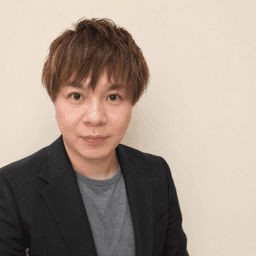
Shingo Arai
CEO, Rokubunnoni Inc.
After completing a Master's degree in Management Engineering at Tokyo University of Science in 2013, Shingo Arai worked as an engineer, data scientist, and data analyst at multiple companies in the web, app, and advertising industries. He entered the cryptocurrency and blockchain space around 2017, founded Rokubunnoni Inc. in January 2018, and launched Crypto Times — a blockchain-focused media outlet — in February 2018. With approximately 9 years in the industry, his expertise spans DeFi, L1/L2 protocols, tokenomics, ZKP, and domestic/international regulatory trends. He actively conducts on-chain asset management and research. He has authored and supervised hundreds of articles, spoken at conferences in Japan and abroad, served as a DeFi investment seminar instructor, and operated KOL ambassador programs.
Recommended Articles