What Is Renaiss? Pokémon Card NFTs: Gacha Expected Value, Liquidity, Redemption
- Duration
- In Progress
- Task
- Supported Chains
- Category
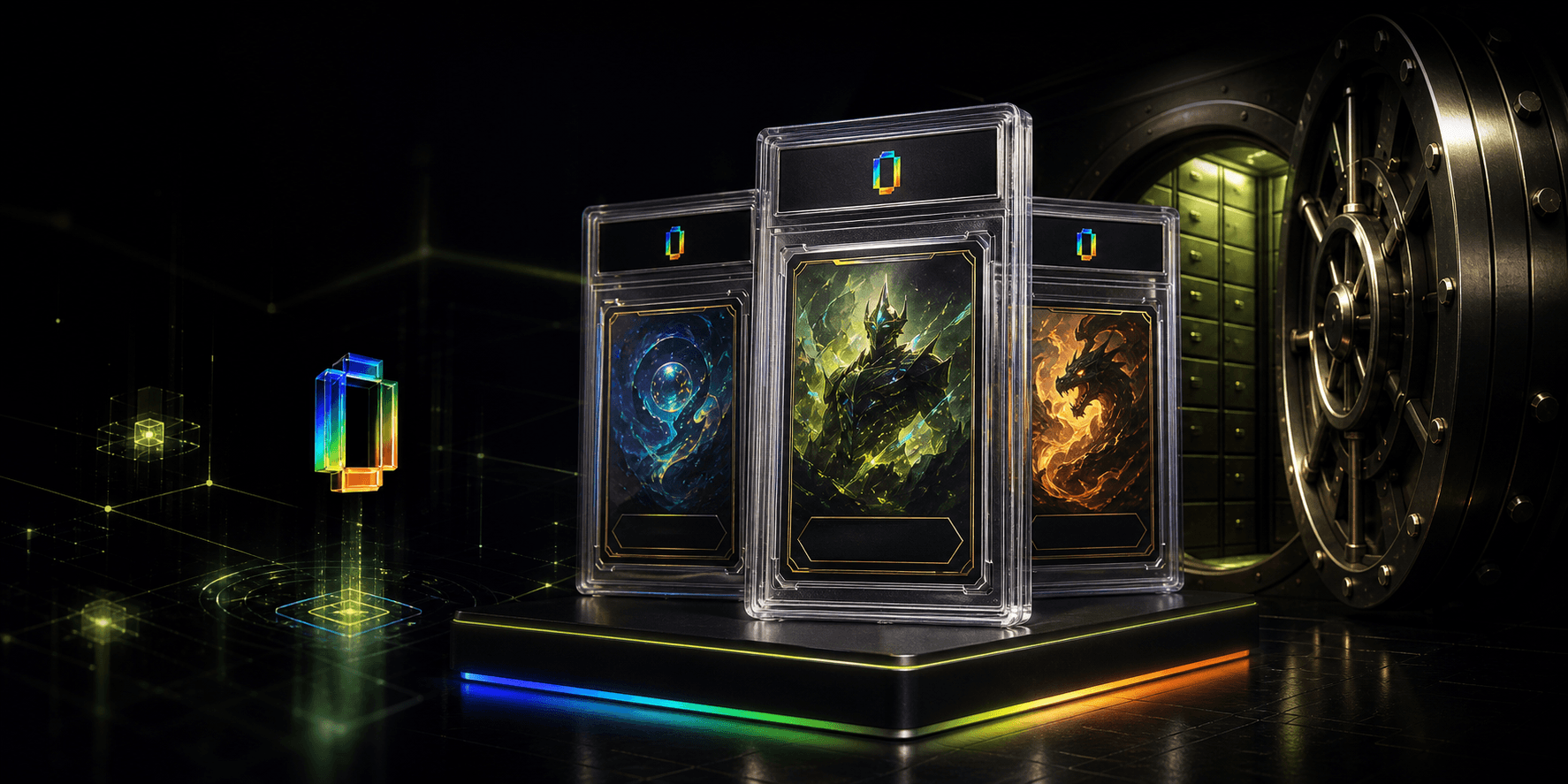
Table of Contents
Renaiss (Renaiss Protocol) turns graded physical Pokémon cards into NFTs on BNB Chain, letting you pull gacha packs, trade cards, and redeem them for the physical item, all paid in USDT. The flow is much the same as Solana's Collector Crypt, with one difference: inventory, drop rates, and the draw calculation itself are published so that anyone outside the company can check them. The open beta that began in November 2025 is still running, and no native token has been issued.
What Renaiss Is: A Gacha and Trading Venue for Pokémon Card NFTs
Three things work today: gacha, where you open packs; the marketplace, where you buy and sell cards; and redemption, where you swap an NFT for the physical card. The lending and leaderboard menus still read Coming soon.
Image: screenshot of the Renaiss official site (captured October 1, 2026)
| Item | Details |
|---|---|
| Chain | BNB Chain (payments in USDT, gas in BNB) |
| Category | RWA (graded trading cards tokenized as NFTs) |
| Stage | Open beta (since November 2025) |
| Funding | $1.5 million (June 2026, led by YZi Labs) |
| Native token | Not issued |
The cards are Pokémon and ONE PIECE, but this is not a licensed service. Renaiss is an independent marketplace with no partnership with, and no endorsement from, The Pokémon Company, Nintendo, or Shueisha.
What an NFT Card Is: The Physical Card Is Graded and Sits in a Vault
What you buy is not the card itself but an NFT standing for ownership of it. The physical card is held in a Vault in Hong Kong, Malaysia, the United States, or elsewhere, and each card has a fixed storage region.
The vaults are operated by third parties, and Renaiss is neither the custodian nor the insurer. Insurance will not necessarily return the full market value. There is no storage fee for now, though one may be introduced with notice.
How Renaiss Differs from Collector Crypt: Open Inventory, Open Draws
Buying graded cards, pulling gacha, and redeeming for the physical item is the same flow you get on Solana's Collector Crypt or Polygon's Courtyard. Beezie, where a digital gacha wins you a physical card, is a close relative, and inventory and order books are separate at each service.
The difference is that inventory, pack contents, and the grades that have already been pulled are published in a form anyone can read without logging in. Note that the higher-priced PANDORA 88 and PANDORA 248 are packs co-produced with Collector Crypt.
The Company Behind Renaiss Protocol and Its Backers
The operator is Renaiss Network Limited, a British Virgin Islands entity. Disputes are settled by arbitration, and class actions are not permitted. The June 2026 round was led by YZi Labs (formerly Binance Labs), with four other firms including Gate Ventures joining. Founder and CEO Winchman is based in Hong Kong and says of himself that he has collected cards from Yu-Gi-Oh! through Pokémon to ONE PIECE.
Renaiss Gacha: Expected Value and the Instant Buyback
All four standing machines show an expected value slightly above their price, but if you have the card you pulled bought back right away, what comes back is around 93% of what you paid.
Image: screenshot of Renaiss (Gacha) (captured October 1, 2026)
As of October 1, 2026, four machines are standing, and each pull yields one card.
| Pack | Price | Displayed expected value | 85% of expected value |
|---|---|---|---|
| PANDORA 28 | $28 | $31 | $26.35 (94.1% of the price paid) |
| PANDORA 48 | $48 | $53 | $45.05 (93.9%) |
| PANDORA 88 | $88 | $96.28 | $81.84 (93.0%) |
| PANDORA 248 | $248 | $271 | $230.35 (92.9%) |
Every machine will buy a pulled card back at 85% within 24 hours of opening. The right-hand column is the average return if that 85% applies to the displayed expected value. Renaiss does not state publicly what the 85% applies to, but on this calculation, using the packs as a way to cash out immediately costs 6% to 7% of the purchase price per pull. The 85% rate is the floor among comparable services, matching Phygitals, while Courtyard pays about 90% and Collector Crypt ranges from 85% to 93% depending on the pack.
Roughly Eight in Ten Pulls Are Bottom-Tier Grade C
Expected value is an average that includes the high-value cards that turn up only rarely, so individual results swing widely.
On PANDORA 28, 78% is Grade C, worth $15 to $35, and Grade S ($145 to $581) is under 1%. On PANDORA 48, Grade C ($25 to $60) accounts for 88%, and the share of the higher grades has fallen since August. The distribution changes, so check the day's odds on the pack screen before you pull.
Whether the Draw Is Fair Can Be Verified with a Tool
Paste the transaction hash of an opened pack into the draw verifier renaiss Fair and it replays the draw in your browser with the same calculation used in production. Renaiss says the draw uses ECVRF, a verifiable randomness scheme, and that results are derived from a value the team cannot choose for itself. Cards are picked from the remaining supply without duplication. The tool is published on GitHub, but the source of the SDK that handles trading and redemption is not.
Can You Sell a Card You Bought on Renaiss? Order Book and Trade Counts
Just over one in ten listed cards carries a sell order, and September closed 144 trades, about five a day.
Image: screenshot of Renaiss (Marketplace) (captured October 1, 2026)
The marketplace shows a reference price (FMV) next to each card's asking price. Of the 4,148 items listed on October 1 (4,093 Pokémon, 55 ONE PIECE), 561 carried a sell order, or 13.5%. September's trading came to roughly $28,000 in total, with 76 buying addresses. The seller pays a 2% fee.
Gacha buying is concentrated in a few hands as well. The 500 packs opened over about five and a half hours on September 29 came from 18 addresses, with the top three accounting for 74%. The gap in scale is just as wide: Renaiss announced cumulative volume above $10 million at the end of April, while Collector Crypt was at roughly $1.3 billion through June.
Card Prices Can Be Tracked on Renaiss Index
How card prices are moving can be checked on Renaiss Index, a reference-price site in the same family. Its 50-card Pokémon index stood at 7,926 on October 1 (base 10,000), down 23% over 30 days and 37% over the year. The ONE PIECE index is down 18.5% over 30 days. If you hold on to a card you pulled, that decline feeds into your result too.
What Renaiss lets you verify from the outside is that the draw is fair, not whether pulling pays.
A design that opens inventory and odds to outside developers only pays off once the apps using it multiply and the order book thickens.
👉 Check the number of sell orders and reference prices on the Renaiss marketplace
The Renaiss Airdrop and the Rewards on Offer Today
No native token has been issued, and no distribution has been promised. What you accrue by using the service today is three things, in-house points, non-transferable badges (SBTs), and referral rewards, and none of them carries a promised cash value.
Renaiss has mentioned the possibility of introducing a token in future but gives no guarantee. The "Renaiss" price page on Bitget belongs to a different asset, and it is no longer being updated.
| Program | What you get | Conditions and deadline |
|---|---|---|
| Superliquid Points (in-house) | Points | Bids, listings, and completed trades on the marketplace. Beta 2.0 began March 24, 2026, with no end date set |
| SBT (in-house) | Non-transferable badges | A usage record across gacha, trading, referrals, and the community. No deadline set |
| Referral rewards (in-house) | A set share of what the person you referred spends opening packs (denominated in dollars) | The referred user registers your referral code. No deadline set |
Superliquid Points: Awarded on Orders That Fill
Points go to bids close to the reference price, listings at prices the market will take, and trades that actually complete. The score depends on how close the price is, how long the order sat on the book, and whether it filled. Beta 2.0 raised the weighting on fills sharply and cut the weighting on listings that never fill. Wash trades and unnatural cancellations can cost points or trigger a reset, so earning points means actually buying and selling cards.
SBTs: Badges Unlocked by Deposits and Usage
The first badge, Fund Your Account, unlocks on a deposit of 60 USDT or more. You also need at least 0.001 BNB separately, for gas. The other badges fall into four groups, gacha, trading, referrals, and community, and once you meet a condition you mint it by pressing Claim badge on the Achievements tab of your profile.
Referral Rewards: A Set Share Every Time a Friend Opens a Pack
Every time someone you referred opens a pack, a set share of what they spent accrues to you; it is settled by period and then collected with a Claim button. A referred user can register a referrer only once and cannot change it later. The share paid out and the cap on how many people you can invite are not stated publicly, so you cannot estimate what you will receive before you start.
How to Receive Renaiss Cards as Physical Cards
Redemption is an irreversible process in which the NFT is burned and the card is shipped. Japan is among the destinations offered, but shipping, customs duties, and the withdrawal fee are all borne by the user.
Image: from Renaiss official Medium (retrieved October 1, 2026)
A single redemption can only cover cards held in the same storage region, up to 50 of them. A shipping quote expires in 10 minutes, and customs duties are quoted separately from shipping. The destination list covers 248 countries and territories including Japan, but whether a shipment can be delivered, and at what price, is settled by the quote. A loss from a card going missing in transit also falls on the user. Cost and transit time only appear once you log in, select your cards, and request a shipping quote.
Getting Started with Renaiss: How to Buy Pokémon Card NFTs
What you need to start is a login via email, Google, X, or a wallet, USDT on BNB Chain, and BNB for gas. No identity documents are required.
Image: from Renaiss official Medium (retrieved October 1, 2026)
- Open Log in at the top right of renaiss.xyz and sign in with an email address, Google, Twitter (X), or a wallet connection.
- Send USDT on BNB Chain, plus BNB for gas, to the address shown under Wallet Info in your profile.
- Pick a machine from the gacha list, check the price, the buyback terms, and your quantity on the right side of the pack detail, then move on to purchase.
- For the card you pull, choose within 24 hours whether to have it bought back, keep it and list it on the marketplace, or redeem it for the physical card.
Who cannot use it: anyone located in a sanctioned or embargoed territory, and anyone named on a national sanctions list. No rule singles out Japan for exclusion, but nothing states that access from Japan is guaranteed either.
👉 Check today's odds and expected values on the Renaiss gacha screen
Summary
Renaiss lets you pull, sell, and physically receive graded Pokémon cards, and what sets it apart from the rest is that the draws and the inventory can be checked from outside. Whether to use the gacha is something you can work out from what the buyback returns and how easily cards sell. No token distribution has been promised, and what points and SBTs are worth will remain unknown until Renaiss states where it is going next.
Sources
- Renaiss official site (2026)
- Renaiss Gacha (2026)
- Renaiss Marketplace (2026)
- Renaiss Terms of Service (2026)
- Renaiss official docs, Redeem (2026)
- renaiss Fair (2026)
- GitHub Renaiss-Protocol/renaiss-fair (2026)
- Renaiss Index (2026)
- GlobeNewswire funding announcement (2026)
- Renaiss official Medium, Superliquid Beta 2.0 (2026)
- Renaiss official Medium, beginner's guide (2026)
- Renaiss official Medium, Global Redemption Guide (2026)
- CoinGecko Learn, explainer on tokenized Pokémon cards (2026)
- KuCoin News, report on volume passing $10 million (2026)
- Founder Winchman's post on X (2026)
Disclaimer
- ・This article is created for informational purposes only and should not be used to solicit the sale, purchase, or underwriting of cryptocurrencies, securities, or other financial products, nor should it be considered an invitation to engage in such transactions, or constitute financial or investment advice.
- ・The information and opinions in this article are obtained from sources that we believe to be reliable, but we do not guarantee their accuracy, completeness, suitability, timeliness, or truthfulness.
- ・We, the authors, and all related parties are not responsible for any damage or loss caused by or related to the information published in this article. Cryptocurrencies involve hacking and other risks, so please conduct thorough research before using them.
Supervised by

Shingo Arai
CEO, Rokubunnoni Inc.
After completing a Master's degree in Management Engineering at Tokyo University of Science in 2013, Shingo Arai worked as an engineer, data scientist, and data analyst at multiple companies in the web, app, and advertising industries. He entered the cryptocurrency and blockchain space around 2017, founded Rokubunnoni Inc. in January 2018, and launched Crypto Times — a blockchain-focused media outlet — in February 2018. With approximately 9 years in the industry, his expertise spans DeFi, L1/L2 protocols, tokenomics, ZKP, and domestic/international regulatory trends. He actively conducts on-chain asset management and research. He has authored and supervised hundreds of articles, spoken at conferences in Japan and abroad, served as a DeFi investment seminar instructor, and operated KOL ambassador programs.
Recommended Articles